Why real learning happens through doing, not memorizing
10-second summary
Memorisation prepares a student for a test and little else, because information that is never used forms weak connections. Knowledge sticks when it is applied — in projects, in real problems, and in contexts the student already cares about.
For decades, education has often relied on memorization. Students read material, repeat information, and prepare for tests by cramming facts into their memory. While this approach can help in the short term, it rarely leads to deep understanding. Real learning happens differently. We understand things best when we use knowledge in practice, not when we simply try to remember it.
The Problem With Memorization-Based Learning
Many students are taught to study by repetition. They reread notes, memorize definitions, and practice the same type of exercise repeatedly. This process often prepares them to pass a test, but the knowledge fades quickly afterward. Why? Because memorization without application does not create strong connections in the brain. When information is not used in a meaningful way, it becomes easy to forget. Think about the difference between reading about how to ride a bicycle and actually riding one. No matter how much theory you study, the real learning begins only when you start practicing. The same principle applies to most subjects in school.
Learning by Doing
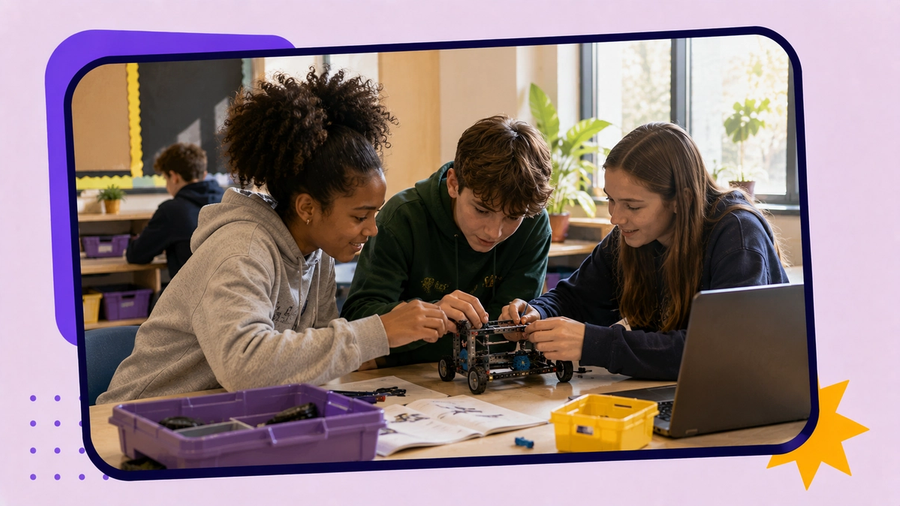
Educational research consistently shows that active learning leads to stronger understanding. When students apply what they learn to real problems, their brains process the information more deeply. Instead of only answering questions on a worksheet, students learn more effectively when they:
- solve real challenges
- build projects
- experiment with ideas
- connect knowledge to things they care about
This approach transforms learning from passive consumption into active exploration.
Connecting Learning to Personal Interests
Another powerful driver of learning is interest. Children naturally pay more attention when a topic relates to something they already enjoy. Sports, animals, space, music, technology, art, and games can all become entry points into academic subjects. When learning connects to these interests, motivation increases automatically. Instead of asking students to adapt to the lesson, the lesson adapts to the student.
A Different Learning Approach
This idea is at the core of what we are building with GradeAid. Instead of presenting the same exercise to every student, the platform begins with the student's interests. Once a child selects topics they care about, the system creates tailor-made learning games and exercises around those interests. A student interested in sports might solve math problems related to game statistics. Someone fascinated by animals might explore science concepts through wildlife scenarios. A child who enjoys technology might encounter puzzles related to robotics or coding. The academic goals stay the same, but the learning experience becomes far more engaging.
From Digital Learning to Real-World Projects
Learning should not stay inside an app. After students practice concepts through interactive exercises, the next step is applying those skills in the real world. This can happen through small projects that encourage students to build, create, analyze, or explore something tangible. These projects help students take what they learned and use it for something real. When students see how knowledge connects to the world around them, learning becomes more meaningful and memorable.
Why This Matters
Education should not be about memorizing information temporarily. It should help students develop the ability to understand, apply, and create. When children move from memorization to application, learning becomes an active process. They stop studying just to complete assignments and start learning to solve problems and build ideas. And that is where real understanding begins.
Try It Yourself
If this approach to learning sounds interesting, you can sign up for a free one month trial and get early access to the platform when it launches. We believe learning should not just stay in a textbook. It should become something students can actually use to build, explore, and create in the real world.
Frequently asked questions
Why doesn't memorisation lead to lasting understanding?
Because memorisation without application does not create strong connections in the brain. Rereading notes and repeating the same exercise can get a student through a test, but information that is never used in a meaningful way is easy to forget shortly afterwards.
What does "active learning" actually mean in practice?
It means applying knowledge rather than only receiving it: solving real challenges, building projects, experimenting with ideas, and connecting what is being taught to something the student cares about. The shift is from passive consumption to active exploration, and it is what makes the brain process information more deeply.
Why do a student's interests matter so much?
Interest acts as a gateway to attention. Children pay more attention when a topic relates to something they already enjoy — sports, animals, space, music, technology, art — so motivation rises without having to be manufactured. Instead of asking the student to adapt to the lesson, the lesson adapts to the student.
What is project-based learning and why does it help?
It is applying a skill to something tangible after practising it: building, creating, analysing or exploring in the real world. It matters because it shows students how knowledge connects to the world around them, which turns temporary recall into something they can actually use.
Isn't learning by doing slower than just covering the material?
It is slower per topic and faster per unit of retained understanding. Covering material quickly feels efficient right up until the point where it has to be retaught, because knowledge that was never applied fades. The goal is not to finish assignments but to be able to understand, apply and create.